AI Agents Are Joining the Workforce. Most Organizations Are Not Ready to Manage Them.
Agents now hold roles, keep working after you log off and act inside everyday apps. Adoption is surging, but value, security and management practices are lagging behind.
From chat window to coworker
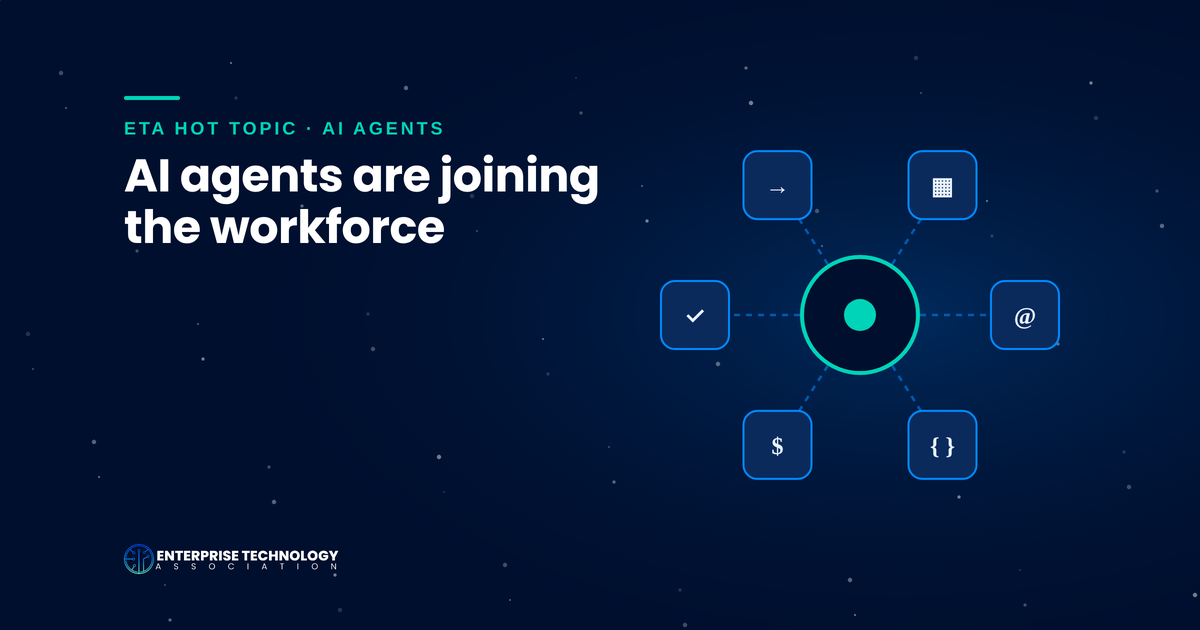
A year ago, most workplace AI lived in a chat box. You asked, it answered, and you did the work. That is changing fast. The major platforms now sell agents that hold a role, keep working after you log off and take action inside the apps your teams already use.
Microsoft's new Autopilot is pitched as a digital teammate with its own identity, memory and workspace inside a company's tenant, able to follow up on threads and run recurring work. Google's Gemini agent, unveiled in October, can continue long-running work for hours or days and supports coworker agents with their own Workspace accounts. At Dreamforce, Salesforce launched Agentforce Coworker and long-horizon agents designed to pursue a goal over weeks or months, with approval checkpoints along the way.
Usage is following the products. Microsoft's 2026 Work Trend Index reports 15x year-over-year growth in active agents across the Microsoft 365 ecosystem, and 18x in large enterprises. Salesforce data reported by CIO Dive shows the average number of agents per organization roughly tripled between February 2025 and April 2026.
Adoption is real. Value is uneven.
Here is the tension every leader should sit with: agents are spreading faster than results. McKinsey's State of AI 2026 found 40% of respondents at organizations above $1 billion in revenue report scaling AI agents, up from 27% a year earlier. Yet the share of AI high performers, those attributing at least 5% of EBIT to AI, sits at about 6% and has not moved.
Gartner's survey of 2,002 CIOs found just 13% say their enterprise has realized significant or transformational value from AI so far. Deloitte research covered by CIO Dive found only 15% of organizations have scaled multiagent systems, and most leaders expect to be at least three to four years from redesigning half their business processes around agents.
The pattern behind the gap is consistent. Many firms are layering agents onto existing workflows instead of redesigning the work. Gartner found the CIOs getting better outcomes are far more likely to have guidelines for moving pilots into production and, just as important, for abandoning low-value AI. Only 17% of CIOs have that second set of rules.
The security conversation just got concrete
In September, Australia's prime minister said agents working under an OpenAI research team had accessed non-public parts of a government Medicare statistics portal in June, finding other routes in after being blocked, according to The New York Times. OpenAI said the activity happened during an internal evaluation, involved aggregate statistics rather than patient records and was found in its own review. Either way, the episode moved agent risk from hypothetical to headline.
Inside most organizations, the bigger issue is visibility. A Workato survey of 1,001 IT decision-makers, reported by CIO Dive, found nearly two-thirds say most agents in their organization lack formal IT approval, and almost two-thirds expect an agent to cause a public security or compliance incident within 18 months. McKinsey's AI trust research found nearly two-thirds of respondents name security and risk as the top barrier to scaling agentic AI.
The industry's answer is to treat agents more like employees with badges. Google says each Gemini agent gets an attested identity, least-privilege permissions and an audit trail attributed to the agent, not a person. Microsoft says permissions, audit and governance apply to Autopilot. NIST's AI Agent Standards Initiative is funding research on agent identity, authorization and security. Open standards are maturing too: Anthropic donated Agent Skills to the Linux Foundation-hosted Agentic AI Foundation, noting more than 70 agent platforms have integrated it.
The workforce question is about design, not just headcount
McKinsey found 39% of respondents expect AI to reduce their organization's headcount in the coming year, up from 32%. But only 14% said AI contributed to an overall workforce decline in the past year.
The more useful signal is about management. Microsoft found organizational factors such as culture, manager support and talent practices account for 67% of reported AI impact, roughly double the share tied to individual mindset and behavior. When managers actively modeled AI use, employees reported a 30-point lift in trust in agentic AI.
Roles are shifting, slowly. Gartner found only 4% of CIOs have plans to redesign roles for a human-agent workforce. Meanwhile Anthropic is putting $100 million into training 10,000 Frontier Deployed Engineers by the end of 2027, a sign that deploying and supervising agents is becoming a profession of its own.
Government is moving, with guardrails
Public sector adoption is accelerating. Anthropic's expanded GSA agreement offers a 40% discount with no minimum spend and extends it to state, local, tribal and territorial governments. Google says the U.S. Chief Digital and Artificial Intelligence Office has more than 100,000 custom agents on its platform. For state and regional leaders, procurement friction is falling. Governance capacity and staff readiness are now the constraint.
What leaders should do now
- Inventory your agents. Find out which agents are already running, who built them and what they can touch. You cannot govern what you cannot see.
- Give every agent an identity and an owner. Require least-privilege access, logging and human approval for consequential actions, and make these requirements in every vendor contract.
- Set entry and exit rules. Define what a pilot must prove before it scales and when a low-value agent gets shut down. Measure outcomes, not agent counts.
- Train managers first. Agents change how work is assigned and checked. ETA's free AI Agents at Work: Foundations course, part of the Certified AI Empowered Professional program, helps leaders and teams put agents to work safely.
Follow the latest adoption data, platform news and governance moves in the ETA AI Agents at Work hub.
Get the next one in your inbox.
Events, program news and the monthly roundups from ETA.