Physical AI Gets Real: What Humanoid Robots Mean for US Manufacturers
Humanoid and mobile robots are moving from demos to paid pilots, but orders still outrun real work. Here is how leaders can separate signal from hype and plan for physical AI.
The robot story has changed
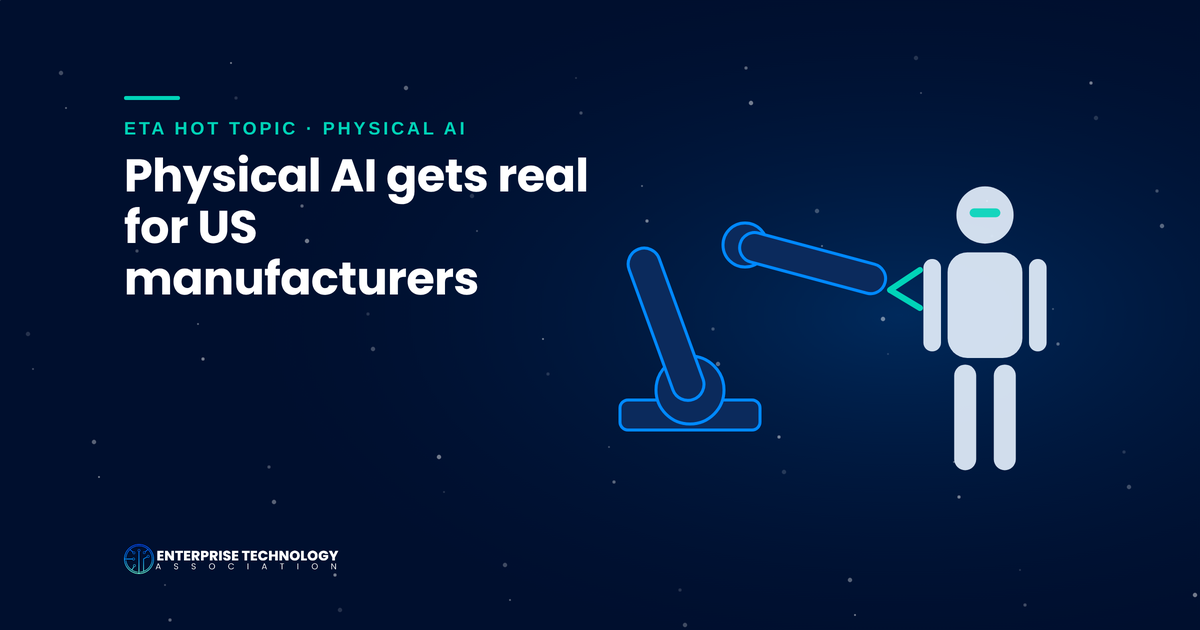
For years, humanoid robots were trade show theater. In 2026 the conversation moved to purchase orders, uptime and union contracts. Physical AI, meaning AI that perceives and acts in the real world through machines, is now a planning question for manufacturers, logistics operators and the regions that host them.
Start with the bigger picture. The International Federation of Robotics reports a record 5 million industrial robots operating in factories worldwide in 2025, after installations rose 11% to more than 600,000 units. China installed about 354,000 of them, 59% of the global total, while the US installed almost 38,500, up 12%. Conventional automation is still the main event. Humanoids are the new frontier on top of it.
Humanoids: real, early and uneven
The humanoid market is still small. Research firm Omdia counted about 13,000 humanoid shipments worldwide in 2025, led by three Chinese makers: AgiBot with 5,168 units, Unitree with 4,200 and UBTech with 1,000.
US players are scaling from a lower base. Figure says its BotQ facility now builds one robot per hour and has delivered more than 350 Figure 03 units. Tesla began early Optimus production in Fremont in October, while warning the ramp would be slow and that significant AI work remains before the robot is useful for open-ended tasks.
The best evidence comes from long-running deployments. At BMW's Spartanburg plant, Figure 02 logged about 1,250 operating hours over roughly 10 months and handled more than 90,000 parts. At GXO's Flowery Branch, Georgia warehouse, Agility's Digit has moved more than 100,000 totes, and GXO plans to add Digit at sites in North Carolina and Tennessee in early 2027. Closer to the Great Lakes and Plains, AGCO will pilot Digit at its Hesston, Kansas plant in 2027 for parts sorting and tote handling.
Orders are not deployments
Read humanoid headlines carefully. A Robotics 24/7 analysis lays out the gap. Agility announced more than $300 million in multi-year Digit orders subject to milestones, yet its merger filing reported about $1.8 million in 2025 net sales. Capacity targets describe what vendors plan to build, not what customers have bought. The author's verdict: progress is real but uneven, and the sector needs consistent reporting of productive hours, uptime and human intervention rates.
That distinction matters for your planning. A memorandum of understanding, a paid pilot and a fleet running two shifts carry very different obligations, costs and risks.
Robot-as-a-service changes the buying decision
Most early humanoid contracts look like subscriptions, not capital purchases. Under the Humanoid and Schaeffler agreement, the vendor supplies robots plus fleet management, maintenance, 24/7 support and updates, with first systems due to go live in German factories before the end of 2026. Agility rents Digit to logistics operators on a subscription basis to lower adoption barriers.
For a plant manager, that reframes the question from whether you can afford a robot to whether a task pays back per hour. It also puts more of the burden on the vendor to keep machines productive.
The software layer is maturing fast
Robot foundation models and simulation are where much of the progress is happening. AWS launched an open source Physical AI Toolchain in October covering synthetic data, training, simulation, edge deployment and over-the-air fleet updates, integrated with NVIDIA's Isaac and Cosmos tools. In a test at a Siemens electronics factory, a wheeled humanoid built simulation first reached 60 tote moves per hour with pick success above 90%, and simulation cut prototype development to 7 months.
China, trade and the policy backdrop
China's lead is about volume and supply chains. Unitree's Shanghai market debut in August closed up 460% on day one. Washington is reaching for trade tools: on October 28 the President signed a Section 232 proclamation finding that robotics and industrial machinery imports threaten national security, ordering negotiations rather than immediate tariffs, with an update due within 180 days. In November, China blocked SoftBank's $5.4 billion purchase of ABB Robotics.
For US manufacturers, component costs, sourcing and vendor choice are now strategic questions, not just procurement ones.
Workers are part of the deal
Labor is moving as fast as the technology. In Korea, more than 86% of Hyundai Motor's roughly 40,000 union members voted for a walkout as the union sought job guarantees tied to AI and the Atlas humanoid. Hyundai plans to begin Atlas deployment at its Georgia Metaplant in 2028.
The lesson for heartland employers is simple: bring workers in early, start with tasks that are dangerous or physically punishing, and be specific about training and redeployment.
What leaders should do now
- Start with the task, not the robot. Pick repetitive, ergonomically hard work like tote moves or parts handling, and define the baseline cost per hour before talking to vendors.
- Demand productive metrics. Ask for operating hours, uptime, intervention rates and references from live sites, and treat order announcements and capacity targets as marketing.
- Model robot-as-a-service against labor reality. Compare subscription cost to turnover, overtime and injury costs, and make the vendor own uptime in the contract.
- Plan for people and policy. Build a workforce engagement and upskilling plan, and stress test your robot supply chain against tariffs and trade restrictions.
Physical AI is moving from showcase to shop floor, one verified deployment at a time. Follow the deployments, deals and policy moves that matter to your region in the ETA Physical AI hub.
Get the next one in your inbox.
Events, program news and the monthly roundups from ETA.